
Understand your anxiety. Learn the recovery process.
Living with panic disorder, OCD, PTSD or persistent anxiety? STAND DOWN explains its recovery process step by step through audio teaching and the science video.
Guided visualisations help you relax as you learn about recovery. Ask CHUCK, your personal guide, about your life, symptoms and the recovery process—so you can use what you hear, not just listen to it.
You’re not choosing to spend your day on alert, it happens on auto-pilot
You wake up checking how you feel. Your heart races, your stomach churns or your breathing changes, and suddenly every sensation has your attention. Those bodily changes are real; noticing them doesn’t mean you’re weak.
You plan around places that feel difficult, ask for reassurance or rehearse what you said long after a conversation ends. Even in a quiet moment, you find yourself checking whether a sensation or thought is coming back. Your body, thoughts and actions can all be caught up in the same alarm.
You don’t need another task list on top of everything you’re already managing. Here you can start with an explanation you can listen to, rather than a worksheet to fill in.
Just sit back and listen. Learn the science behind your fear response and follow STAND DOWN’s recovery process, step by step.
What you’re dealing with is normal within disordered fear:
“What if” loops: You deal with endless risk assessments and after one has subsided, another pops up.
Hypervigilance: You scan your environment and even inside your body, for threats - threats that may not even exist.
Racing thoughts: Your mind jumps ahead, replays a conversation or experience or rechecks the same things again and again.
Intrusive thoughts: Unwanted, disturbing or out-of-character thoughts show up, confuse and worry you and you’re left wondering why they appeared.
Your condition isn’t a diagnosis or label.
In anxiety conditions, your day can be a patchwork of changing feelings, thoughts and symptoms: the checking and unwanted thoughts of OCD and Pure O, the constant scanning in health anxiety, the places you avoid with agoraphobia, or the intense physical sensations of panic. Health anxiety, postnatal anxiety, social anxiety, emetophobia and phobias, eating disorders and self-harm also bring their own issues.
Panic Disorder
When a sudden surge of fear makes you watch every bodily sensation
Agoraphobia
When you plan your day around places or situations you fear
Generalised Anxiety
When “what if” worries keep returning and you stay on alert
Social Anxiety
When you monitor yourself around others and replay it afterwards
Health Anxiety
When a symptom sends you checking for an explanation
OCD and Pure O
When unwanted thoughts and mental checking keep pulling you back
Emetophobia
When fear of vomiting shapes what you do and where you go
PTSD
When you keep scanning for danger after trauma
Derealisation
When you feel detached from yourself or your surroundings
Fear of Dying
When a sensation triggers fears about death or losing control
Eating Disorders
When food or eating brings anxiety into your day
Postnatal Anxiety
When anxiety and unwanted thoughts follow the birth of your baby
You can start at the beginning and take it one session at a time.
Your recordings follow an intended order, so each explanation gives you a foundation for the next. You can pause, return and listen again without needing to produce a “right” response.
You don’t need worksheets
You’re not asked to journal, track mood scores or complete breathing drills.
No homework for you
You press play and follow the explanation. There are no assignments to hand in or streaks to maintain.
Listen at your own pace
Your place is saved, so you can come back to a session and move forward at your own pace.
What you’ll do as you listen
Your programme is ready when you are.
Listen in your private web app, on your phone, tablet or computer. You can add it to your phone’s home screen for easy access; you don’t need to find it in an app store.
- Keep it closeYou can open your programme in the browser on your phone, tablet or computer, and add it to your phone’s home screen.
- Pick up where you left offYour place is saved automatically. Open the app and continue your current session.
- Your private accessYour playback is tied to one registered device at a time. Audio isn’t provided as offline files, and accounts aren’t for sharing.
Meet CHUCK, your personal guide.
CHUCK draws on more than 30 years of recovery research and practice from the Institute’s team of psycho-educators. Ask him to explain the framework you hear in your recordings and how it relates to your day.
Ask CHUCK about your symptoms, relationships, unusual thoughts or feelings, and the recovery process. You don’t have to stick to the topic of your latest recording.
Ask follow-up questions in a private signed-in conversation whenever you need another explanation.
CHUCK is an AI-powered guide informed by the Institute’s specialist knowledge. Ask him to explain an idea another way or explore how it relates to your situation.
You can use Ask CHUCK when signed in, even without buying the programme. CHUCK doesn’t provide a clinical diagnosis or emergency assistance.
You can ask Chuck anything!
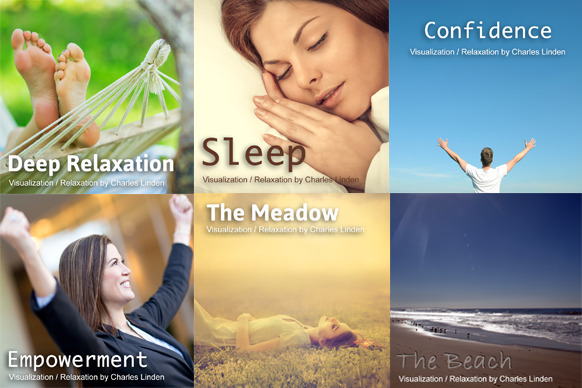
Take time to listen to a guided visualisation.
Alongside your main listening path, you get six separate guided visualisations for relaxation, sleep and reflection. Choose one when you want space to unwind; they aren’t steps you need to complete before the next lesson.
You’ll find them in their own menu inside your protected listening app, separate from the main programme.
Know what you’re listening to.
STAND DOWN teaches Charles Linden’s approach to persistent alarm. He developed the framework, and you’ll hear it explained in the private recordings.
Research explains how threat responses involve your brain and body, not just feelings of fear. Your biology, experiences and environment can all play a part in anxiety. These sources aren’t studies of STAND DOWN and don’t establish its effectiveness.
Learn about the InstituteExplore the science behind fear.
Follow the recordings in order to hear STAND DOWN’s explanation of the alarm response. The science video helps you connect the ideas as you listen.
The research below explains fear and anxiety. It hasn’t tested STAND DOWN’s results.
Background references
- [1] LeDoux JE, Pine DS. “Using Neuroscience to Help Understand Fear and Anxiety: A Two-System Framework.” American Journal of Psychiatry (2016). Read the research abstract (opens in a new tab). Distinguishes threat-related bodily and behavioural responses from conscious fear and anxiety; not a trial of STAND DOWN.
- [2] National Institute of Mental Health. “Anxiety Disorders.” Read the health overview (opens in a new tab). Covers daily-life impact and research into biological and environmental factors; not a product endorsement.
Ready to understand what you’re experiencing?
Follow the ordered audio programme to understand your alarm response and learn STAND DOWN’s recovery process step by step. Your access also includes six guided visualisations and the member science video for one payment of Checking price…. You get 12 months on one registered playback device, with no subscription or auto-renewal. If you want weekly live webinars, they are optional and separate at £15 GBP per month through a separate checkout.